Introduction:
What is Pure Shilajit, and why has this dark, natural substance become so well known among people interested in traditional mountain resources? Shilajit is a sticky, mineral rich material found in rock crevices in high mountain regions, including parts of the Himalayas. It has a long history in traditional systems of medicine and is now sold in different forms around the world.
The interest in shilajit is closely connected with its natural origin, complex composition, and traditional importance. However, understanding this material requires more than reading product labels or listening to marketing claims. Its quality can vary, and natural does not always mean safe.
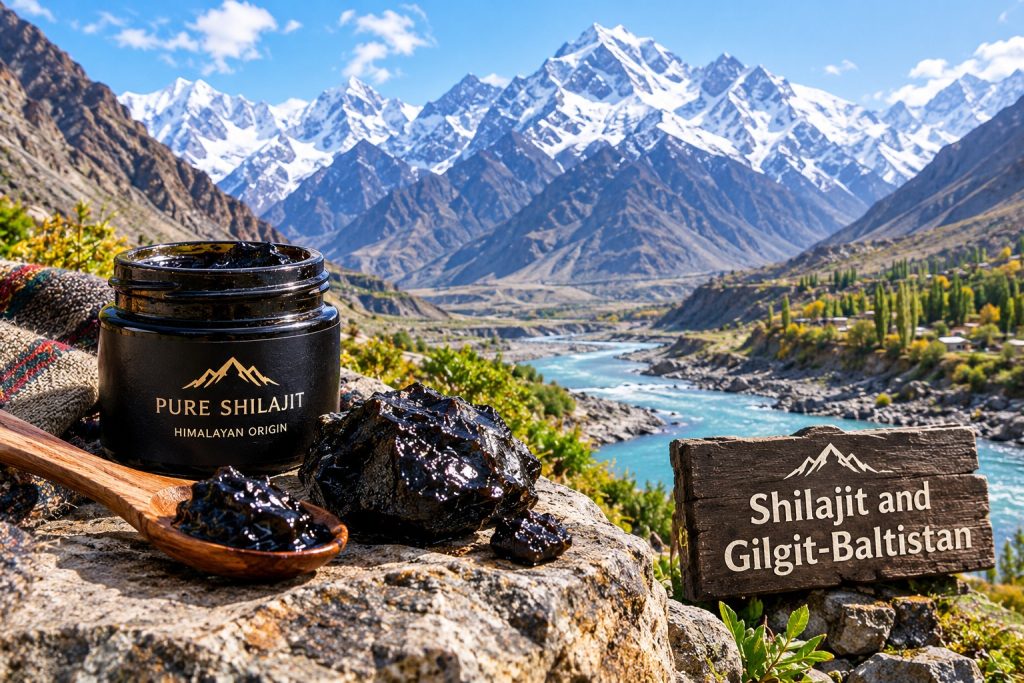
What is Pure Shilajit? I belong to Gilgit Baltistan, where Pure Himalayan Shilajit is found in the high, untouched mountains of Nagar, Hunza, Skardu and Ghizer. Every summer, local people climb to very high altitudes to collect this rare resin from the rocks. For hundreds of years, people of Gilgit Baltistan have been using Shilajit as a powerful herbal medicine for strength, energy and healing. It is not a factory product, it is a pure gift from our mountains.https://health.clevelandclinic.org/
For readers interested in the mountains of Gilgit Baltistan, shilajit is also part of a wider conversation about Himalayan environments, local knowledge, and the responsible use of natural resources.This complete 2026 guide explains its origin, formation, composition, quality, and safety in simple English. It also separates established information from claims that still need stronger scientific evidence.
1. What Is Pure Shilajit?
Meaning and Basic Characteristics:
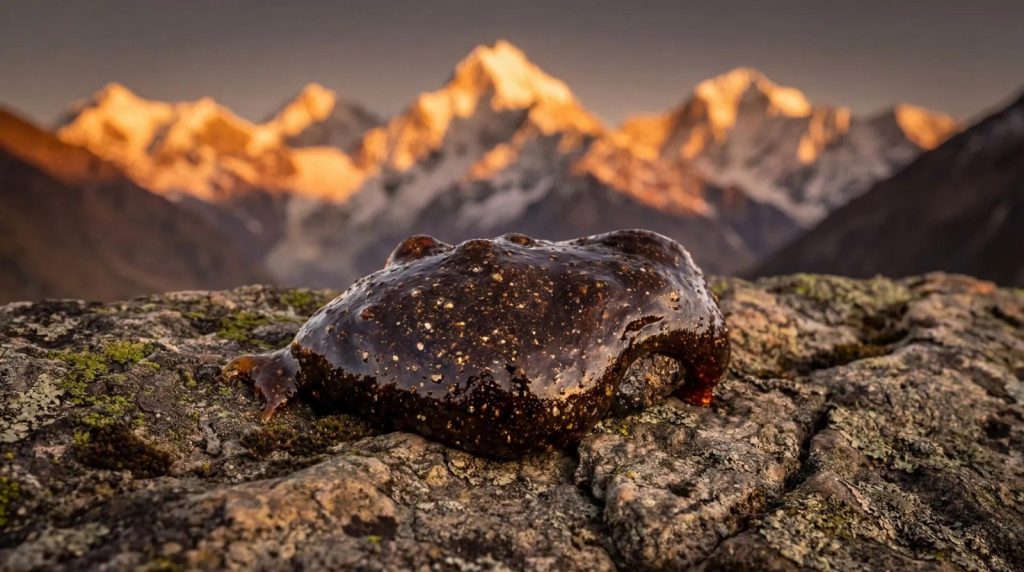
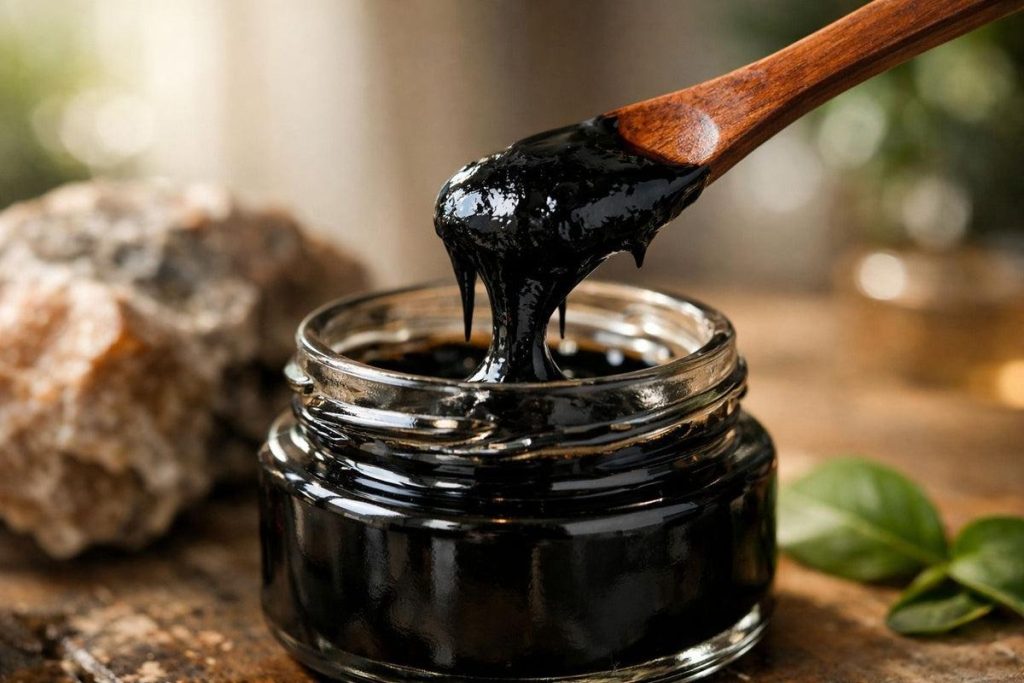
What is Pure Shilajit in simple words? It is a naturally occurring, dark colored substance that develops over long periods in mountain rocks. It is often described as a sticky resin or mineral organic material because it contains a mixture of organic compounds and mineral elements.All items
Shilajit is commonly associated with the Himalayan mountain system.What is Pure Shilajit, It can appear in rock cracks and other sheltered spaces where environmental conditions allow the material to accumulate. Its appearance may range from dark brown to nearly black.
Although people sometimes describe shilajit as a mineral, it isn’t simply a single mineral like quartz or salt. Instead, it is a complex mixture of different substances. Its exact composition depends on the source and the materials involved in its formation.
Why Is It Called Pure Shilajit?
The word pure is often used to describe shilajit that has been cleaned and processed to remove unwanted material. However, the word alone doesn’t prove that a product is safe or free from contamination.
When examining what is pure shilajit, it’s important to distinguish between three things:
- Raw shilajit: What is Pure Shilajit,Material collected from a natural source that may contain rock particles and contaminants.
- Purified shilajit: Material that has undergone a cleaning or purification process.
- Laboratory-tested shilajit: A product that has been tested for identity, composition, and relevant contaminants.
These descriptions aren’t interchangeable. A purified product may still require independent laboratory testing, while a product labelled “100% natural” may not provide enough evidence of its quality.https://kashmiril.com/
Main Characteristics:
The common characteristics of shilajit include:
- A dark brown or black appearance.
- A sticky or resin like texture in many preparations.
- A complex mixture of organic compounds and minerals.
- Natural variation between samples.
- A long history of traditional use in parts of Asia.
These characteristics can help explain what shilajit is, but they can’t establish whether an individual sample is safe for consumption.
2. How Does Shilajit Form in the Mountains?
The Role of Plants, Microorganisms, and Rocks:
One reason shilajit attracts attention is its unusual formation process. Researchers commonly describe it as a complex material associated with the gradual breakdown and transformation of organic matter within mountain environments.
Over long periods, plant material and other organic substances can undergo chemical and biological changes. Microorganisms contribute to the breakdown of organic matter, while surrounding rocks and environmental conditions influence the material that eventually accumulates.https://yourhealthier.com/
Shilajit isn’t formed overnight. Its development is associated with long periods of natural change, although the exact formation process and composition can differ between locations.
When considering what is pure shilajit, its origin matters because the surrounding geology, local vegetation, and environmental conditions can affect its chemical profile.
Why Mountain Environments Matter:
What is Pure Shilajit,Mountain environments contain many different natural features. Temperature changes, rainfall, snowmelt, rock structure, and elevation all influence how materials move and accumulate.
In some places, water can carry dissolved substances through cracks in rocks. Changes in temperature and moisture may also affect the movement and concentration of organic material.
However, not every dark substance found on a mountain is shilajit. A reliable identification process requires more than looking at its color or sticky texture.https://harbelremedies.com/2026/09/29/berberine-for-blood-sugar/
The Himalayan environment is especially relevant because it contains a wide range of geological formations and ecological zones. These differences help explain why shilajit samples from different areas may not have identical compositions.
Is Shilajit a Rock, Plant, or Mineral?
Shilajit doesn’t fit neatly into only one of these categories.
| Category | How it relates to shilajit |
|---|---|
| Rock | It may accumulate in cracks and spaces within mountain rocks. |
| Plant material | Organic matter contributes to the material’s formation. |
| Mineral elements | Different mineral elements may be present in the final mixture. |
| Organic compounds | These compounds form an important part of its complex composition. |
This mixture of organic and mineral components makes shilajit different from a simple plant extract or a single naturally occurring mineral.
3. Shilajit and Gilgit Baltistan:
The Himalayan Landscape of Gilgit-Baltistan:
Gilgit Baltistan is known for its dramatic mountain landscapes, glaciers, valleys, and high altitude environments. The region includes parts of the Karakoram, western Himalaya, and Hindu Kush mountain systems.
Its geography supports a rich variety of natural environments, from dry mountain valleys to areas influenced by snow and glacial meltwater. The region’s plants, rocks, and climate are important parts of its natural heritage.
What is pure shilajit in the context of Gilgit Baltistan? It is a question that connects a widely discussed Himalayan substance with the need to understand local sources, environmental conditions, and product quality.
Shilajit is associated with Himalayan mountain regions, but it shouldn’t be assumed that every mountain valley in Gilgit Baltistan contains it or that every locally sold product comes from a verified source.shilajit is best for healt gilgit baltistan people use this herb for energy and strength:https://harbelremedies.com/blogs/
A product’s geographical label is not proof of its origin. Sellers should be able to provide credible sourcing information, while laboratory testing can help assess its identity and safety.
Traditional Knowledge and Local Communities:
Mountain communities often develop detailed knowledge of their local environment. Generations of experience can help people recognize seasonal changes, understand difficult terrain, and identify natural materials.
Such knowledge is an important part of cultural heritage. Still, traditional recognition and scientific verification serve different purposes.
For example, a person may recognize a substance based on its appearance or where it was collected. Laboratory analysis can provide additional information about its composition and whether harmful contaminants are present.
What is Pure Shilajit,When discussing what is pure shilajit, both local knowledge and scientific testing deserve consideration, but neither should be used to make unsupported medical promises.https://harbelremedies.com/2026/09/26/what-are-herbal-remedies/
Responsible Sourcing and Conservation:
Natural resources should be collected carefully. Irresponsible harvesting can damage fragile mountain environments, disturb rock habitats, and create unnecessary pressure on local ecosystems.
Responsible sourcing should include:
- Respect for local environmental regulations.
- Careful collection practices that avoid unnecessary damage.
- Honest information about the material’s origin.
- Suitable purification and quality-control procedures.
- Protection of local knowledge and fair treatment of communities.
Gilgit-Baltistan’s natural beauty is valuable in its own right. Any discussion of mountain products should recognize that environmental protection is just as important as commercial interest.https://harbelremedies.com/booking/rainbow-mountain-red-valley/
Why Origin Alone Doesn’t Guarantee Quality:
A Himalayan label may sound appealing, but geography alone cannot establish purity. A substance collected from a remote mountain can still contain unwanted metals, microorganisms, or other impurities.
Likewise, a product from a well-known region isn’t automatically better than one from another area.
The most useful approach is to examine traceable sourcing, manufacturing standards, and independent laboratory results rather than relying only on claims about altitude or mountain origin.
4. Main Components of Pure Shilajit:
Fulvic Acid and Other Organic Compounds:
Fulvic acid is one of the organic components commonly discussed in research on shilajit. What is Pure Shilajit,It belongs to a broad group of complex organic substances associated with the breakdown and transformation of organic matter.
Fulvic acid receives attention because of its chemical properties and its role in the composition of shilajit. However, its presence doesn’t automatically mean that every product has the same quality or produces the same effects in the human body.
What is pure shilajit from a chemical perspective? It is a variable mixture rather than a single compound with one fixed formula. Its chemical profile depends on the source, processing method, and other environmental factors.
Shilajit may also contain other organic substances, including compounds belonging to the broader humic-substance group. Their relative amounts can vary considerably.
It is therefore important to distinguish between the properties of an individual compound studied in a laboratory and the effects of a complete shilajit product consumed by a person. Evidence about one compound cannot automatically prove the effectiveness of the whole mixture.
Minerals and Natural Variation
Laboratory analyses have identified a range of mineral elements in shilajit samples. Their amounts differ according to the sample and its source.
Some elements are essential nutrients in appropriate amounts, while others may be harmful when present at excessive levels.
| Component or element | General significance |
|---|---|
| Fulvic acid | An organic component often studied in shilajit research |
| Other humic substances | Complex organic materials that can contribute to its chemical profile |
| Iron | An essential element, although its presence doesn’t prove a product is beneficial |
| Calcium | An essential mineral involved in normal body functions |
| Magnesium | An essential mineral needed for several biological processes |
| Lead and arsenic | Potentially harmful contaminants that require careful monitoring |
| Mercury and cadmium | Toxic elements that may pose health risks if contamination is excessive |
This table describes possible components, not the guaranteed contents of every sample.
A common misunderstanding is that a product containing many minerals must be healthier. In reality, the identity, amount, and chemical form of each element matter. The presence of an essential mineral doesn’t cancel out the risks associated with a toxic contaminant.
Why Composition Testing Matters:
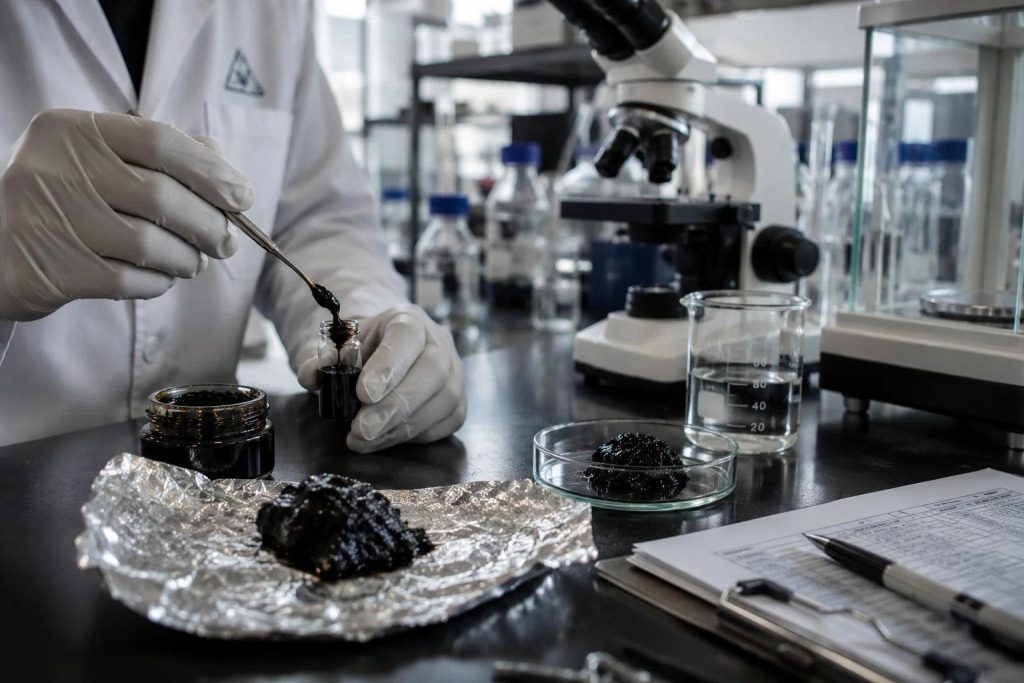
Testing helps determine what is actually present in a sample. It can identify selected organic compounds, estimate certain mineral levels, and measure contaminants.
A good quality-control program may examine:
- Identity and consistency of the raw material.
- Relevant heavy metals, including lead and arsenic.
- Microbial contamination.
- Residual processing chemicals, where relevant.
- Whether the finished product matches its label.
These tests should be appropriate for the product and conducted by a qualified laboratory. One test alone may not answer every quality question.
For readers researching what is pure shilajit, the key lesson is simple: a clear chemical profile provides more meaningful information than a seller’s broad claim that a product contains many minerals.
5. How to Recognize Quality Shilajit:
Appearance, Texture, and Smell:
Shilajit is often described as dark, sticky, and resin like. Depending on its composition and preparation, it may look dark brown or black and may soften when warmed.https://harbelremedies.com/booking/north-island-adventure-tour/
Its smell and taste can also vary. Some products have a strong, earthy odor, but there is no single smell that proves a sample is genuine.
These physical characteristics can provide basic information about the material. They cannot reliably confirm its identity, purity, or safety.
Why Appearance Alone Isn’t Enough:
Online sellers sometimes recommend home tests based on dissolving, heating, stretching, or smelling a sample. Such demonstrations may appear convincing, but they cannot detect all harmful contaminants.
For example, a substance may dissolve in water and still contain unwanted metals. What is Pure Shilajit, A sample may have the expected texture and still be adulterated.https://harbelremedies.com/about-me/
Understanding what is pure shilajit requires a more reliable process than visual inspection.
Consider these quality indicators:
A batch-specific laboratory report
Look for a report linked to the actual batch or lot number, rather than an unrelated certificate.
Contaminant testing
The report should address relevant heavy metals and microbial risks, with results compared against appropriate safety limits.
Clear product information
The label should identify the manufacturer, ingredients, batch number, and expiry or best-before information where applicable.
Transparent sourcing
A responsible seller should explain where the material comes from and how it is processed.
What Is a Certificate of Analysis?
A Certificate of Analysis, often called a COA, is a document that reports the results of specified tests on a material or product.
For shilajit, a useful COA should identify the tested sample and provide relevant results, methods, and units. A statement such as “lab tested” without accessible supporting information is less useful.
Ideally, buyers should be able to verify the laboratory and confirm that the tests are relevant to the product being purchased.
A COA doesn’t guarantee that a product is effective as a treatment for any illness. It is primarily a quality and testing document.
6. Pure Shilajit vs. Processed and Adulterated Products:
The words used on packaging can be confusing. Raw, natural, purified, concentrated, and pure may describe different aspects of a product.
Raw material may contain unwanted particles and contaminants. What is Pure Shilajit, Purification is intended to remove undesirable substances, but the outcome depends on the process and its effectiveness.
A processed product isn’t necessarily inferior to a raw one. In fact, appropriate processing can be important for safety. The real question is whether the process is controlled and the finished product has been tested.
| Product description | What it generally means | What to verify |
|---|---|---|
| Raw shilajit | Material in a minimally processed state | Identity and contamination risks |
| Purified shilajit | Material treated to remove unwanted substances | Purification standards and test results |
| Concentrated extract | Material processed to concentrate selected components | Extraction method and composition |
| Shilajit blend | Shilajit mixed with other ingredients | Full ingredient list and amounts |
| Adulterated product | Material mixed with undeclared or misleading substances | Independent testing and product traceability |
What is pure shilajit when comparing these categories? The best answer is a product whose identity, ingredients, processing, and safety can be verified not simply the product with the most impressive label.
Be cautious about exaggerated claims, secret formulas, and promises of guaranteed results. A responsible manufacturer should be willing to provide understandable information rather than asking customers to trust advertising alone.
7. Common Forms of Shilajit:
Shilajit is sold in several forms. These include resin, powder, capsules, and liquid preparations. The form describes how the product is presented, not whether it is genuine or safe.Search result
Resin:
Resin is a thick, sticky preparation that may resemble the material’s commonly described natural texture.What is Pure Shilajit, Its appearance can vary according to processing and composition.However, resin is not automatically purer than other forms. A resin product still needs appropriate quality testing.
Powder:
Powdered products may be made from processed or dried material. They can be easier to package and measure, but their quality depends on the starting material and manufacturing process.A powder label should clearly state what it contains and whether other ingredients have been added.https://harbelremedies.com/blood-pressure-control-2026/
Capsules and Tablets:
Capsules and tablets provide a convenient format. Some contain shilajit extract, while others may include additional ingredients.Check the amount of shilajit per serving, the complete ingredient list, and any warnings. Marketing statements about extract strength should be supported by clear information about the formulation.
Liquid Preparations:
Liquid products may contain processed shilajit dissolved or suspended in a liquid. The solvent, concentration, storage requirements, and other ingredients can affect product quality.Regardless of the format, the same principle applies: a product’s appearance and convenience cannot replace reliable testing.https://harbelremedies.com/2026/10/08/seabuckthorn-of-gilgit-baltistan/
8. Safety, Purity Testing, and Responsible Buying:
Why Natural Doesn’t Always Mean Safe:
What is Pure Shilajit,A naturally occurring substance can contain harmful contaminants. Shilajit samples have been found to contain toxic elements, making careful quality control important.
A peer-reviewed study published in 2021 examined shilajit products and identified several elements of concern, including lead and arsenic. Other research has also highlighted the importance of testing raw materials and finished supplements.
This doesn’t mean every shilajit product is contaminated. It means consumers shouldn’t assume that every product is safe simply because it comes from the mountains.https://harbelremedies.com/natural-herbs-for-blood-sugar/
Questions to Ask Before Buying:
If you’re evaluating a product, consider the following questions:
- Does the manufacturer provide a credible, batch specific laboratory report?
- Are relevant heavy metals and microbial contaminants tested?
- Is the ingredient list complete?
- Can the manufacturer explain its sourcing and purification process?
- Does the packaging provide clear identification and safety information?
- Are the product’s claims realistic and supported by evidence?
If the seller cannot answer basic questions about quality, consider choosing a different product or avoiding it altogether.
What About Health Claims?
Traditional use is an important part of the history of shilajit, but it isn’t the same as proof of effectiveness in modern clinical research.
Some early studies have examined possible biological effects, yet the available evidence remains limited for many widely advertised claims. What is Pure Shilajit,Shilajit shouldn’t be presented as a proven cure for a disease or as a replacement for medical treatment.For more background on evaluating traditional remedies and their safety, visit the U.S. National Center for Complementary and Integrative Health.
Who Should Seek Medical Advice?
Anyone considering a shilajit supplement should discuss it with a qualified healthcare professional, particularly if they take medication or have an existing medical condition.
People who are pregnant or breastfeeding should avoid self-prescribing supplements and seek professional advice. The same caution applies to children and people with liver, kidney, or other significant health concerns.If a product causes an unexpected reaction, stop using it and seek appropriate medical guidance.
Responsible Buying in 2026
The growing interest in natural products makes transparency especially important. Buyers should look beyond social media recommendations and attractive packaging.
For people purchasing shilajit associated with Gilgit-Baltistan, responsible buying also means checking whether the claimed origin can be verified. A mountain name, local story, or high-altitude claim doesn’t prove the identity or safety of the material.The most reliable decision combines traceable sourcing, appropriate purification, independent testing, and realistic expectations.https://harbelremedies.com/welcome-to-herbal-remedies-in-2026/
9. FAQs bout Pure Shilajit:
1. What is Pure Shilajit made of?
What is Pure Shilajit made of? It is a complex natural mixture containing organic compounds, humic substances, and mineral elements. Its exact composition varies depending on the source, surrounding environment, and processing methods. It isn’t a single chemical or a product with an identical formula in every batch.
2. Where does pure shilajit come from?
Shilajit is associated with high mountain environments, particularly the Himalayan region. It develops through complex natural processes involving organic material and geological conditions. Products may come from different mountain regions, so the claimed source should be verified rather than assumed from the label.https://harbelremedies.com/2026/10/08/seabuckthorn-of-gilgit-baltistan/
3. Is shilajit found in Gilgit-Baltistan?
Shilajit is associated with the wider Himalayan mountain region, and Gilgit-Baltistan has a diverse mountain environment. However, the origin of an individual product should be verified. A seller’s claim that a product comes from Gilgit-Baltistan isn’t proof by itself that the material was collected there or meets quality standards.
4. How can I identify pure shilajit?
You can’t reliably confirm purity through color, smell, texture, or home water tests alone. Look for credible laboratory testing, clear product information, and a batch-specific Certificate of Analysis. Testing should cover relevant contaminants, including heavy metals and microorganisms.https://harbelremedies.com/20-powerful-medicinal-herbs/
5. Is natural shilajit always safe?
No. Natural materials can contain harmful contaminants. Raw shilajit may contain heavy metals or microorganisms, and processing doesn’t guarantee that all contaminants have been removed. Independent testing and appropriate quality controls are important before a product is considered suitable for consumption.
6. What is the difference between raw and purified shilajit?
Raw shilajit is collected material that may contain unwanted particles and contaminants. Purified shilajit has undergone processing intended to remove undesirable substances. The quality of purified material depends on the effectiveness of that process and the testing of the finished product.
7. Does pure shilajit have scientifically proven health benefits?
What is Pure Shilajit,Research has investigated possible biological effects, but strong clinical evidence is limited for many popular health claims. Traditional use and early laboratory findings shouldn’t be treated as proof that shilajit can prevent or cure disease. Anyone considering it as a supplement should discuss the risks with a healthcare professional.https://harbelremedies.com/10-most-powerful-herbs/
8. Is Himalayan origin enough to prove purity?
No. Himalayan origin describes a geographical claim, not a safety certificate. Even material collected from remote mountain areas can contain contaminants. Reliable identification, suitable purification, and laboratory testing are more useful indicators of quality than location alone.
9. What should I check before purchasing shilajit in 2026?
Check the manufacturer, ingredient list, batch number, expiry information, sourcing details, and independent laboratory report. Be cautious of exaggerated promises and products that hide their ingredients. If the seller cannot provide credible evidence of quality, it’s safer not to rely on the product.
Conclusion: Understanding Pure Shilajit in 2026
What is Pure Shilajit? It is a complex natural substance associated with mountain environments, particularly the Himalayas. Its distinctive appearance, organic compounds, mineral content, and traditional history have made it an important subject of interest for people exploring natural resources.https://harbelremedies.com/blood-pressure-control-in-2026/
Gilgit Baltistan adds an important regional perspective to this topic through its remarkable mountains, varied geology, and local environmental heritage. What is Pure Shilajit,Nevertheless, geographical origin should always be supported by reliable information, and traditional knowledge should be considered alongside scientific evidence.
The most important lesson is that natural origin alone doesn’t guarantee purity or safety. A trustworthy product should have transparent sourcing, appropriate purification, and credible laboratory testing. Consumers should also approach health claims carefully and seek professional advice before using supplements.https://harbelremedies.com/natures-free-pharmacy/
By understanding what is pure shilajit, how it forms, what it contains, and how its quality can be assessed, readers can make better informed decisions. In 2026, responsible sourcing, scientific awareness, and respect for mountain environments remain essential parts of any meaningful discussion about this fascinating Himalayan material.